 admin@playreo.in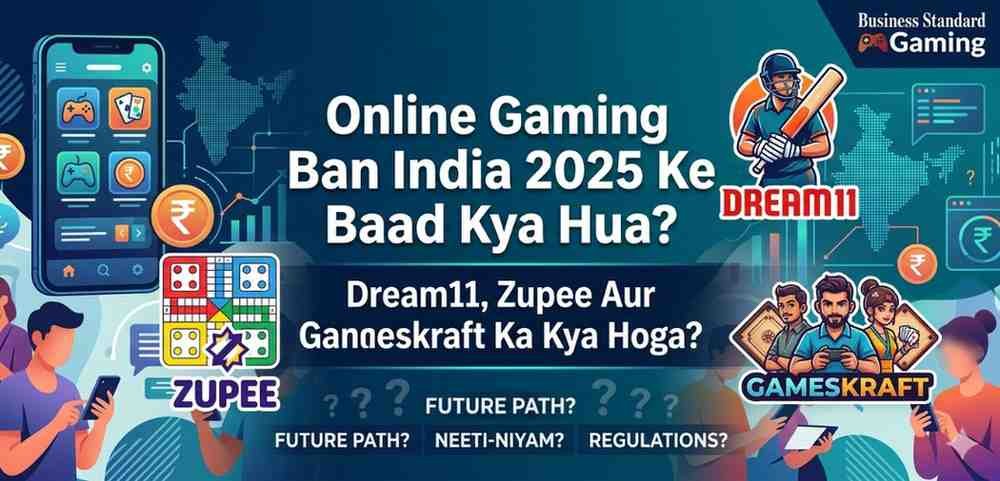
If you’ve ever opened Dream11 to join a cricket contest, or played a paid Ludo match on Zupee during IPL season, then you probably noticed something strange happened in August 2025. The cash contests disappeared. The “Add Cash” buttons stopped working. And suddenly, apps that had millions of daily users were asking people to just withdraw their money and wait.
That’s because the Online Gaming Ban India 2025 became real — and it changed everything almost overnight.
This article breaks down what actually happened, how the big platforms responded, and what the situation looks like right now for companies and regular users.
What Is the Online Gaming Ban India 2025 — and Why Did It Happen?
The Indian Parliament passed a law called the Promotion and Regulation of Online Gaming Bill, 2025. It was cleared by the Lok Sabha on August 20 and by the Rajya Sabha just a day later. President Droupadi Murmu gave her assent to it on August 22. Business Today
The law isn’t about video games like BGMI or Call of Duty. It specifically targets real-money gaming — any online game where you deposit money hoping to win more back. Under the Act, offenders who continue to offer such games can face up to two years in prison and a fine. Gadget Bridge
Why Did the Government Take Such a Strong Step?
The government’s reasoning, as stated by Electronics and IT Minister Ashwini Vaishnaw while piloting the bill, was simple but firm. He said online money games had become a “big problem” and needed to be banned outright to protect society — especially middle-class youth — from the lure of betting-based games. Upstox
There had been growing public concern about young people spending their savings on fantasy sports apps and rummy platforms, sometimes going into debt. The government decided that a partial regulation wasn’t enough. A full ban was the answer.
How Big Was the Industry Before the Online Gaming Ban India 2025?
To understand the impact, you need to appreciate just how large this industry had become.
India’s online gaming market was valued at $3.7 billion and was projected to more than double to $9.1 billion by 2029. The Week That’s not a small number. This was a fast-growing sector with genuine investor interest, jobs, and even sports sponsorships tied to it.
According to industry experts, around 4 lakh companies, 2 lakh jobs, investments worth ₹25,000 crore, and annual GST collections of ₹20,000 crore were all at risk when the bill was proposed. The Week
Big platforms like Dream11, MPL, Gameskraft, Zupee, and WinZO had all built their entire business models around real-money games. When the law passed, there was no soft landing for them.
Dream11: From Fantasy Sports Giant to Sports Entertainment Platform
Dream11 was arguably the most well-known name in Indian online gaming. With around 250–260 million users and a high-profile sponsorship of Team India’s cricket jerseys, it was deeply embedded in Indian sports culture.
But the Online Gaming Ban India 2025 hit Dream11 hard — and fast.
Dream Sports co-founder and CEO Harsh Jain acknowledged that 95% of Dream11’s revenues and all of its profits vanished overnight. Business Today That’s an extraordinary admission for the founder of what was once one of India’s most successful startups.
What did Dream11 do? Rather than fight the government in court, Jain made it clear that his company would not oppose the ban, saying: “The government has made it clear that they don’t want this right now. I don’t want to fight with the government on something they don’t want.” Business Today
Dream11’s New Direction
Dream11 announced that it is shifting from a fantasy gaming platform to a second-screen sports entertainment platform. Under the new model, it will offer creator-led live match watch-alongs, where fans and sports creators experience matches together, along with real-time fan reactions and free-to-play fantasy sports. MEDIANAMA
Dream11 is also building on its other verticals, including streaming platform FanCode, sports travel vertical DreamSetGo, and Dream Game Studios. The parent company has also reportedly forayed into personal money management through Dream Wealth. YourStory
It’s a massive pivot — and it shows how seriously they’re taking the new environment.
Zupee: Paid Ludo Gone, Free Games Still Running
If you’ve used Zupee, you probably remember it as the app that let you play Ludo for real money. Simple interface, quick games, and the thrill of winning a few hundred rupees.
That’s no longer available. But Zupee hasn’t shut down entirely.
Zupee discontinued its paid options but continues to offer free titles such as Ludo Supreme, Ludo Turbo, Snakes & Ladders, and Trump Card Mania. The Daily Jagran
The company’s pivot is interesting. Zupee has launched “Zupee Studio,” a short-format content platform hosting one-to-three-minute drama shows, and is offering a subscription for ad-free games and shows. MEDIANAMA
In other words, Zupee is trying to become a mini entertainment app rather than a gaming app. Whether that works in a market crowded with YouTube Shorts and Instagram Reels remains to be seen. But for now, at least the platform is still alive and running free games.
Gameskraft: RummyCulture Paused, Dialogue Ongoing
Gameskraft is a Bengaluru-based company best known for running RummyCulture, one of India’s most popular rummy platforms. It operates multiple card game apps, and it had been growing steadily before the Online Gaming Ban India 2025 came into effect.
Gameskraft confirmed that it paused its “Add Cash” feature and suspended gameplay services on its rummy apps, including RummyCulture, effective August 22. Business Today
The company said it is focusing on “constructive dialogue with policymakers, responsible innovation, and regulatory alignment.” Business Today That’s corporate language for: we’re trying to figure out what to do next.
Withdrawals for users remained open throughout the transition, which was reassuring for anyone who had money sitting in their Gameskraft wallet. But the core service — playing rummy for money — has stopped.
MPL, WinZO, and Others: A Sector-Wide Shutdown
It wasn’t just these three platforms. The Online Gaming Ban India 2025 triggered a sector-wide collapse of real-money gaming across India.
India’s online gaming industry went into a tailspin as platforms including MPL, Zupee, Dream Sports, Gameskraft, and Probo suspended their real-money gaming offerings after Parliament passed the legislation. Upstox
Paytm’s First Games formally exited real-money gaming while continuing to operate social and free titles. Flutter said it had suspended Junglee’s real-money operations and warned that the abrupt regulatory shift could push consumers towards unregulated platforms. Outlook Business
And the job losses were significant. More than two lakh direct and indirect jobs linked to the real-money gaming ecosystem were reportedly affected, with several prominent gaming firms including Gameskraft, Head Digital Works, PokerBaazi, Games24×7, MPL, Zupee, and Hike resorting to layoffs as their business models became unviable following the ban. Outlook Business
What Happened to User Funds?
This was the question on everyone’s mind. If the apps stop working, what happens to the money inside your account?
Most platforms handled this well, at least on the surface. Dream11 sent messages to users saying account balances were safe and withdrawable. MPL said new deposits would stop but withdrawals would remain open. Gameskraft allowed withdrawals even after pausing gameplay.
However, not every platform behaved responsibly. The Enforcement Directorate alleged that WinZO withheld around ₹43 crore, while Gameskraft and Pocket52 together retained more than ₹30 crore in escrow accounts that were meant to be returned to users. Outlook Business These are serious allegations that are still under investigation.
If you had money in any gaming app during the Online Gaming Ban India 2025 rollout, the general advice was always: withdraw first, ask questions later.
Legal Challenges and Court Battles
Not everyone simply accepted the ban. Industry groups are preparing a Supreme Court challenge against the new law. TechLatest
Industry associations including the All India Gaming Federation (AIGF), E-Gaming Federation (EGF), and the Federation of Indian Fantasy Sports (FIFS) wrote to Home Minister Amit Shah, highlighting the sector’s concerns. Business Today
The argument from the industry side was consistent: fantasy sports require skill, not luck. They had been fighting this battle in courts for years and winning. The new law, they argued, ignored all of that legal history and painted every real-money game with the same brush.
Whether the courts will agree remains to be seen. The outcomes of these legal challenges will shape the future of the Online Gaming Ban India 2025 for years.
What About eSports and Free-to-Play Games?
Here’s the thing many people missed: the government was not against gaming in general. The law specifically said it wants to promote eSports and social gaming.
Prime Minister Narendra Modi said the bill “highlights our commitment towards making India a hub for gaming, innovation and creativity” and that it will “encourage e-sports and online social games.” TechCrunch
So games like BGMI, Free Fire, Valorant, and competitive eSports tournaments are not affected by the Online Gaming Ban India 2025. The ban is specifically about games where you deposit real money to win real money — whether that’s rummy, fantasy sports, or ludo-for-cash.
The Bigger Picture: What This Means for Indian Gamers
For the average person who played Dream11 or Zupee casually, the change is real but manageable. You can still play the free versions of these apps. You can still watch cricket and follow sports. You just can’t put ₹49 into a contest and hope to win ₹5,000 anymore.
For the millions of users who were genuinely addicted to real-money gaming — spending more than they could afford — this is probably good news, even if it doesn’t feel that way right now.
For the industry, the road ahead is much harder. Companies that had unicorn valuations are no longer on that list. Dream11, MPL, Gameskraft, Games24x7, Zupee, and WinZO — each built squarely around real-money gaming — have exited the unicorn list. YourStory
The Online Gaming Ban India 2025 didn’t just change some apps. It restructured an entire industry.
Final Conclusion
The Online Gaming Ban India 2025 was sudden, sweeping, and deeply disruptive. Platforms that had grown into billion-dollar businesses saw their core revenue streams vanish in a matter of days. Dream11 is now chasing sports entertainment. Zupee is trying short-form video. Gameskraft is in dialogue with the government. MPL has pulled out. WinZO faces ED scrutiny.
For regular users, the key takeaway is simple: free gaming continues, paid contests are done, and your old wallet balances should be withdrawn as soon as possible if you haven’t already.
This is one of the most significant regulatory changes the Indian tech and gaming world has seen — and its full impact will continue to unfold over the next few years, both in courts and in boardrooms.